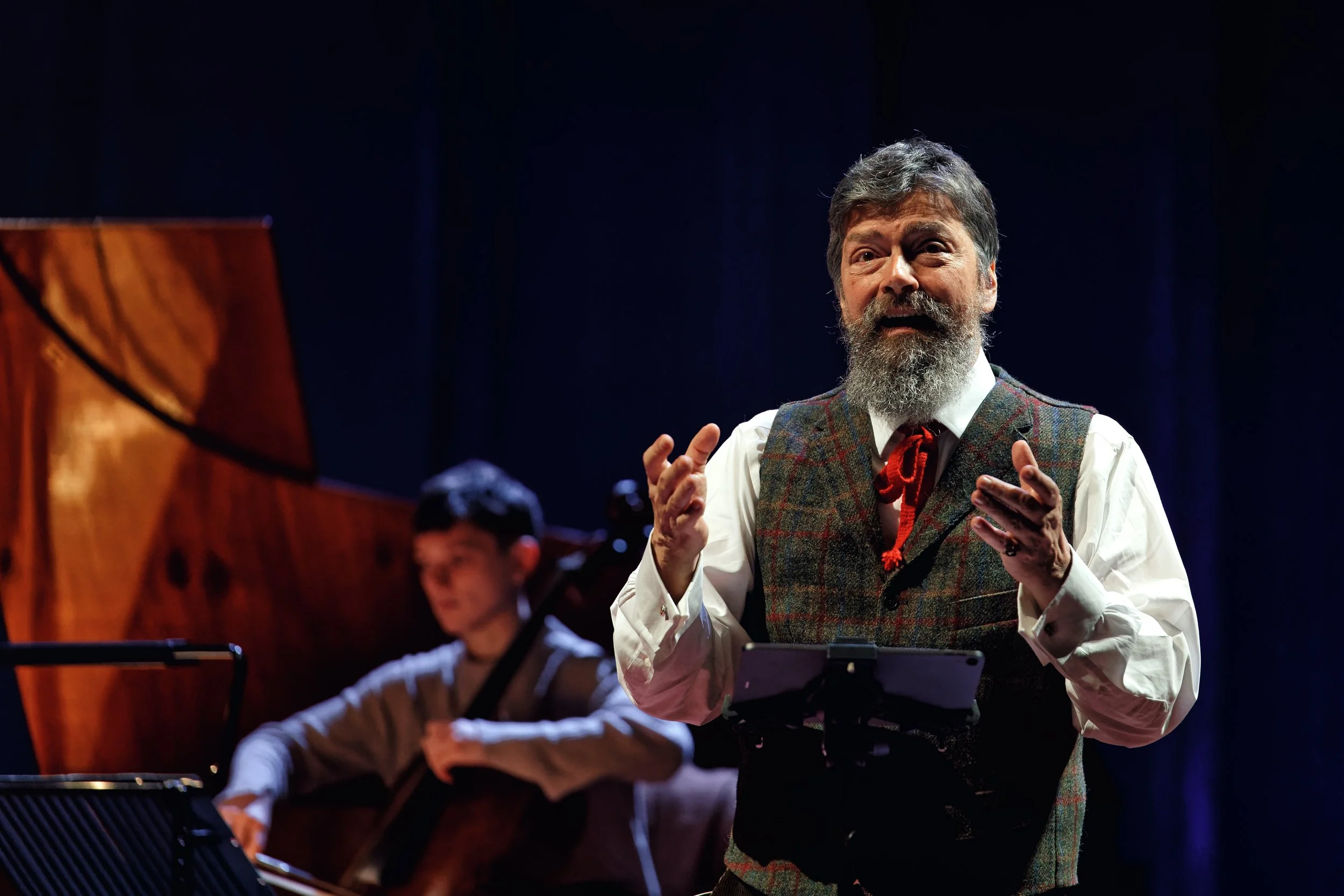
Manfred
Jedidiah Wentz, recitation / Shunske Sato, violin / Octavie Dostaler-Lalonde, cello / Artem Belogurov, Romantic era fortepiano
Music by Robert and Clara Schumann, Fanny and Felix Mendelssohn
One of the genres we have been passionately exploring over the past two years with Postscript is that of melodrama. Melodramas, invented in the 18th century, became a popular form of performance in which spoken text and music are combined. The genre flourished in the 19th and early 20th centuries, with contributions by Mendelssohn, Liszt, Wagner and even Schoenberg. Robert Schumann was no exception, and his Manfred: Dramatisches Gedicht in drei Abtheilungen, scored for full orchestra, a choir, nine solo voices and a narrator, is ambitious in scope and dramatic effect. Manfred was based on Lord Byron's scandalous and sensational dramatic poem, full of supernatural elements featuring a romantic anti-hero: a demonic, brooding and hurt character who causes physical and emotional suffering to everyone around him.
Throughout the 19th century, Manfred was often performed as a one-man show. With elaborate gestures and melodious declamation, one actor read Byron's verses and used his voice to create and animate all the different characters in the story. The musical accompaniment created moments of great intensity by both uniting and contrasting the music with the text. Inspired by stories of this lost performance tradition, Postscript's musicians have teamed up with historical actor Jedidiah Wentz to create a new, intimate chamber version of Manfred.
Besides Robert Schumann's Manfred, arranged for piano trio, the score includes music by Clara Schumann, Fanny and Felix Mendelssohn.